

LESER Safety Valves for on-board cryogenic applications
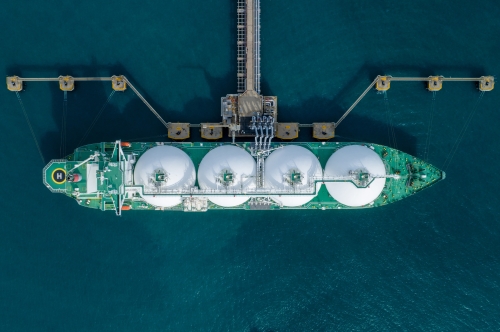
For decades, the international liquefied gas shipping sector has relied on LESER Safety Valves. Apart from specialized LNG vessels designed to carry these energy sources, more and more ships of all types use LNG as fuel.
Over the past 25 years, the liquefied gas sector has become a main pillar of the global energy supply. Driven by the demand for flexible, clean and safe energy, substantial capital has been invested in liquefaction plants, liquefied gas carriers and import terminals. At LESER, this trend arrives mainly in the form of orders from Europe and Germany.
LNG and LPG carriers, whether operating on inland waterways or ocean routes, are often fitted with LESER Safety Valves. While past installations were primarily found on piping, tanks and refrigeration equipment as well as loading and discharging systems, the increasing use of LNG and LPG as ship fuel has expanded the range of applications.
Advanced tankers, cruise ships and ferries often have dual-fuel or pure gas-powered engines, which are likewise often protected by LESER Safety Valves. Today, several hundred vessels are cruising the world’s oceans with LESER valves on board to protect their cryogenic (extremely cold) systems operating at -162 °C. And the number keeps growing. According to the ship classification society DNV Maritime, 87 new ships with LNG propulsion were ordered during the first half of 2025 alone, 81 of them are containerships. An additional 13 LNG bunkering vessels are on order, which are needed to refuel LNG-powered ships.